The Complete Guide
Custom Made Chair Stack Covers — The Australian Owner's Complete Guide
Covering a stack of outdoor chairs sounds simple until you try to buy a cover off the shelf. The height is almost always wrong. Most standard covers are sized for two or three chairs at most. Stack six or eight chairs and you are looking at something 120 to 150 centimetres tall, and that simply does not exist in a standard product range. A custom cover made to your actual stack is the straightforward fix.
This guide covers how to measure a chair stack properly, what to think about before you order, and how the cover material holds up in outdoor conditions.
Width
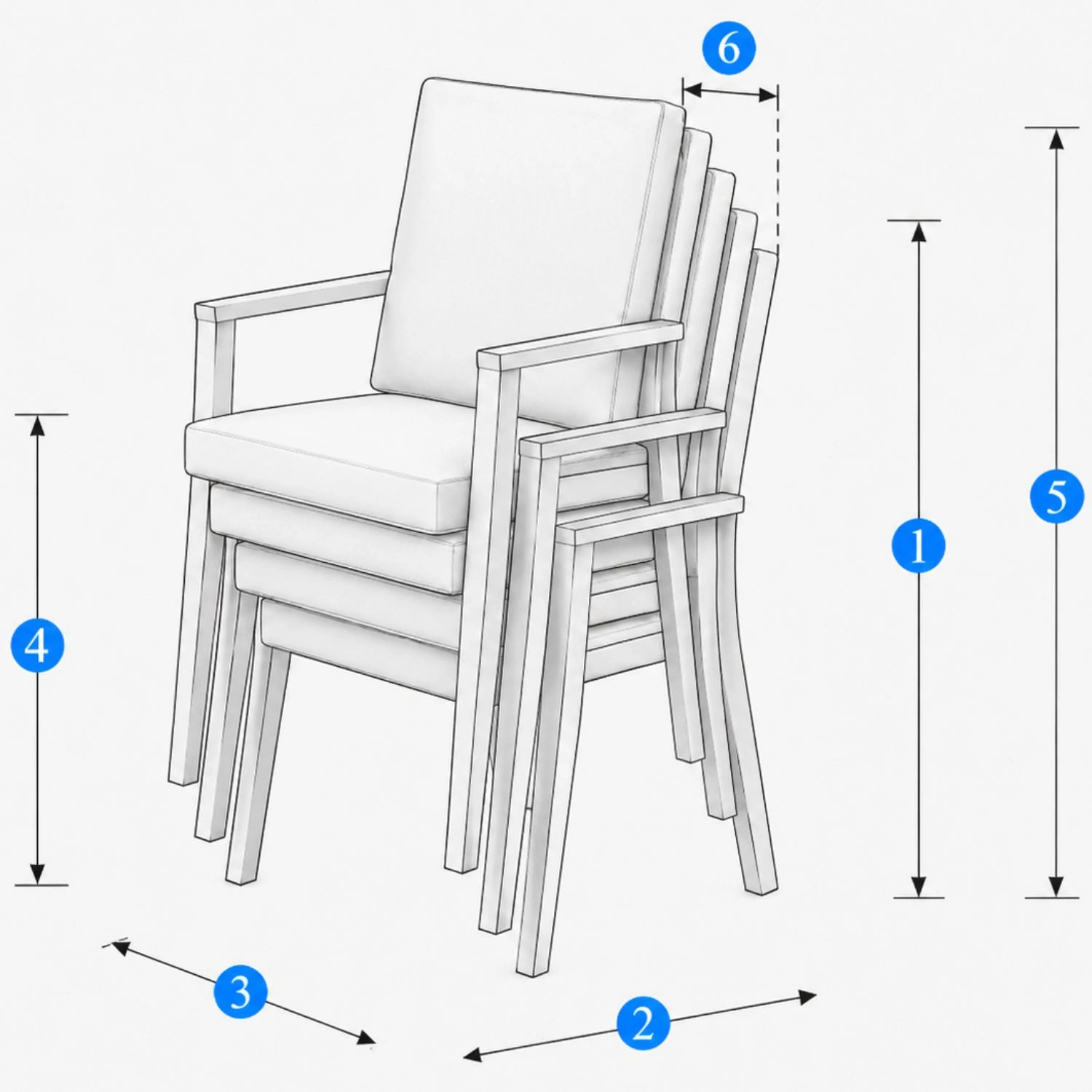
Stack all your chairs before you measure. Width is the widest point of the assembled stack, measured side to side. On most chairs this is somewhere around the armrests or the outer edge of the seat. If your chairs have armrests that protrude beyond the seat frame, the armrests will define your width measurement. Measure from the outermost point on one side to the outermost point on the other side.
Chairs sometimes fan out slightly when stacked if they do not nest perfectly. Measure the actual width of the stack as it sits, not what you think it should be.
Depth
Depth is the front-to-back measurement of the stack at its deepest point. When chairs are stacked, the bottom chair usually defines the depth because the legs and seat of the lowest chair sit at the widest stance. The upper chairs often nest inside and their footprint is smaller. Measure from the frontmost point of the bottom chair to the backmost point, including any leg protrusion.
If your chairs have legs that splay outward at the bottom, include that in your depth measurement. The cover needs to slip over the whole structure.
Height
Height is from the ground to the top of the highest chair in the stack. Stack your chairs first, then measure from the floor straight up to the top of the backrest on the uppermost chair. This number changes depending on how many chairs you stack. If you typically stack six but sometimes stack eight, measure the height you want to cover. A cover made for six chairs will not reach the ground when you have eight stacked.
If the chairs have rubber feet or angled legs, measure from where the chair actually sits on the ground, not from the bottom of the frame if that is elevated.
The material
All our covers are made from 200gsm solution-dyed polyester. For a chair stack, you want something with enough weight to stay in place on a tall, slightly top-heavy structure without being so stiff that it is hard to pull on and off quickly. This weight hits that balance well. The cover drops over the stack from the top and sits under its own weight without needing to be tied down in calm conditions.
Solution-dyed fabric means the colour runs through the fibre, not just on the surface. Surface-coated covers look fine when new but can crack and peel after a couple of Australian summers. Solution-dyed fabric does not have that problem. The colour holds, the fabric stays flexible, and it does not become brittle with heat.
The fabric is waterproof for normal rain. Water runs off the sides and does not soak through under standard rainfall. If the top of the cover has a flat surface and rain pools there, it will eventually find a path through. Positioning the stack so it tilts very slightly, or using the cover under a veranda, avoids this.
Care and storage
Wipe down the cover with a damp cloth for dust and dirt. Use mild soap and a soft brush for tougher marks, then rinse with a hose. Let it air-dry fully before folding. Do not machine wash or tumble dry.
When the chairs are in use and the cover is not needed, fold it loosely and store it out of direct sun. Consistent UV exposure will shorten the life of any outdoor fabric. A storage bag or a shelf in a shed keeps it in good condition between uses. For commercial operators covering chairs every night, the cover will see a lot of use and a lot of folding. Inspect it a couple of times per season for any wear at the folds and clean it regularly to stop grime working into the fibres.