The Complete Guide
Custom Made Egg Chair Covers — The Australian Owner's Complete Guide
Egg chairs are one of the harder pieces of outdoor furniture to find a cover for. The curved pod shape, the wide variety of sizes between brands, and the combination of hanging and floor-standing models means the standard cover aisle at a hardware store is largely useless. If you have spent any time searching, you already know this. A custom cover made to your actual pod dimensions is the only reliable way to get a proper fit.
This guide walks you through measuring your egg chair correctly, explains why the curved shape requires a slightly different approach than a flat-backed chair, and covers what to expect from the cover material itself.
Width
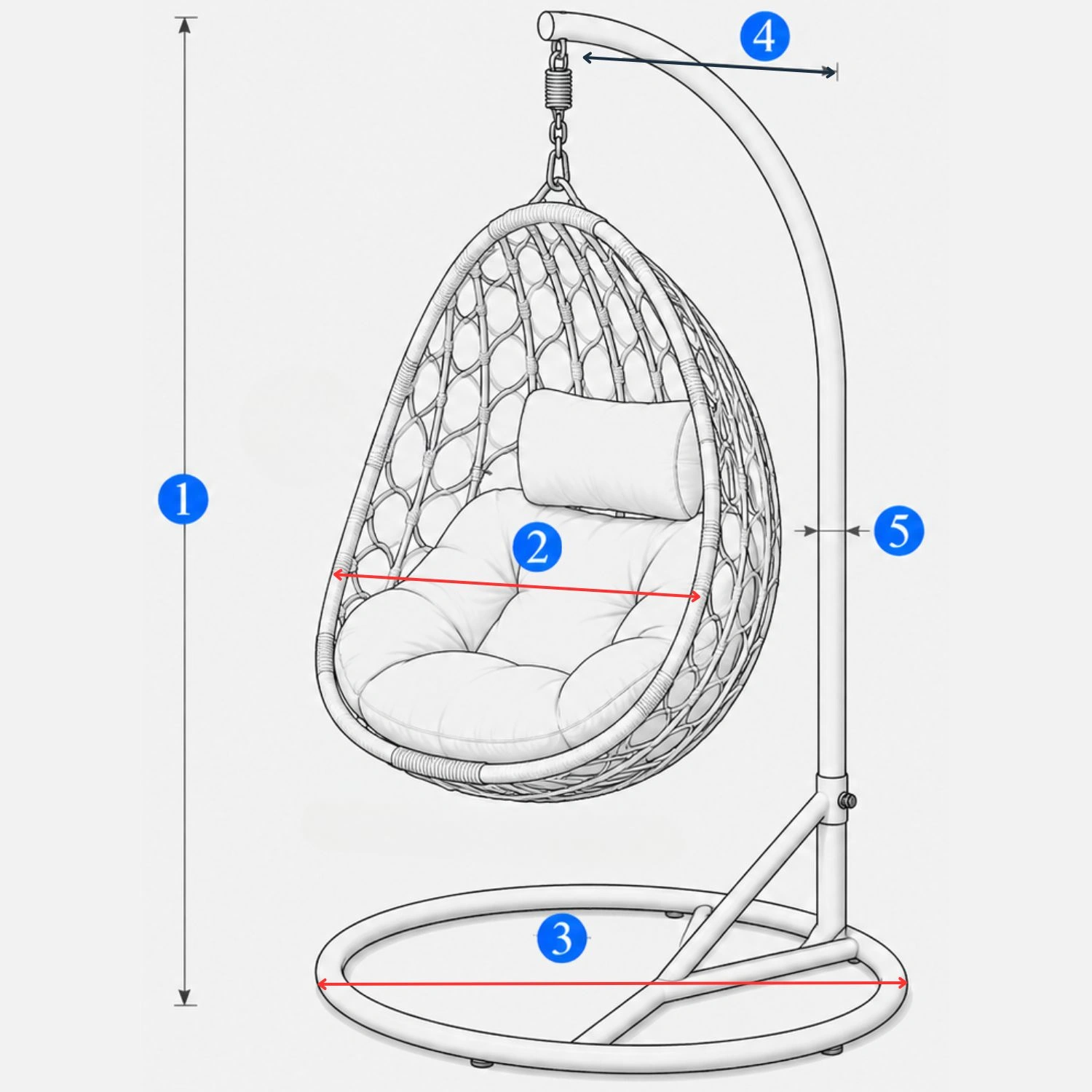
Width is the widest horizontal measurement of the pod from one side to the other. Hold your tape measure straight and level across the outside of the pod at its widest point. Do not follow the curve of the shell. You want a straight-line measurement from edge to edge. On most egg chairs this widest point is somewhere around the middle of the pod where the seat bowl is broadest.
Depth
Depth is the front-to-back measurement of the pod at its deepest point. Again, hold the tape straight rather than following the curve. Stand to one side of the chair and measure from the frontmost point of the pod to the backmost point. On some egg chairs the back of the pod curves inward toward the hanging point or stand attachment, so make sure you measure to the actual outer edge of the shell, not where it starts to narrow.
Height
Height is measured on the pod only, from the lowest point of the pod shell to the highest point. Do not measure from the ground, and do not include the stand or hanging hardware. If your chair has a small lip or edge at the bottom of the pod, measure from that. If it tapers smoothly to a hanging point, measure to where the shell ends and the hardware begins.
A note on the stand and hanging frame. These are not part of your measurements. The cover is built to enclose the chair pod. Whether that pod sits on a weighted base or hangs from a timber frame, the pod shape and dimensions are what determine your cover size.
The material
All our covers are made from 200gsm solution-dyed polyester. The weight is heavy enough to hold its shape on a curved pod without sagging but light enough that the cover is easy to put on and take off. Solution-dyed means the colour is part of the fibre itself rather than a surface treatment. Covers with a surface coating can peel, crack, or fade unevenly after a season or two in Australian sun. Solution-dyed fabric holds its colour and stays flexible through heat and UV exposure.
The fabric is waterproof. Rain runs off cleanly and the seams are tight enough to stop water working through under normal rainfall. The cover is not designed to be submerged or to handle pooling water on its surface, so if you can position the chair under an overhang during heavy rain that will extend the life of the cover.
Caring for your cover
Keeping the cover clean is straightforward. Wipe it down with a damp cloth for general dust and debris. For bird droppings or stubborn marks, use a mild soap and a soft brush and rinse with the garden hose. Let the cover air-dry fully before putting it back on the chair. Do not machine wash or tumble dry.
If you store the cover away during summer or during a period when the chair is in use, fold it loosely and keep it out of direct sun. Prolonged UV exposure will shorten the life of any fabric, even a solution-dyed one, so storing it out of the sun when it is not on the chair is a good habit.
Egg chairs that hang from a frame will move in the wind, and the cover will move with them. This is normal. The drawcord at the base helps keep the cover from riding up. In strong wind, particularly gusty or sustained wind, the safest option is to remove the cover and store it until conditions ease.