The Complete Guide
Custom Made Mounted TV Covers — The Australian Owner's Complete Guide
An outdoor or alfresco TV is exposed to conditions that indoor screens are never designed to handle. This guide covers how to measure a wall-mounted TV for a custom cover and what to look for in the material.
Why alfresco TVs need a cover
A TV mounted under a covered outdoor area is protected from direct rain most of the time, but it still gets condensation, windborne moisture, dust, insects, and UV on the face of the screen. Condensation is particularly damaging because it forms on the screen and around the port covers at the back when the temperature drops overnight, then evaporates during the day. Over time, moisture gets into the edges of the screen panel and the connection ports.
This is not a problem that most people notice until the screen develops a cloudy patch or starts showing dead pixels near the edges. By that point the damage has been done.
A cover fitted when the TV is not in use keeps the face dry, the ports sealed, and the screen surface protected from UV and dust.
The measurement that most people get wrong
The single most common mistake when ordering a TV cover is using the screen size in inches as the width measurement.
The inch size of a TV refers to the diagonal measurement of the display area inside the frame. A 65-inch TV has a screen with a diagonal measurement of 65 inches. The actual frame width is always different. It is also different between brands at the same nominal size — a 65-inch Sony and a 65-inch Samsung have different frame widths.
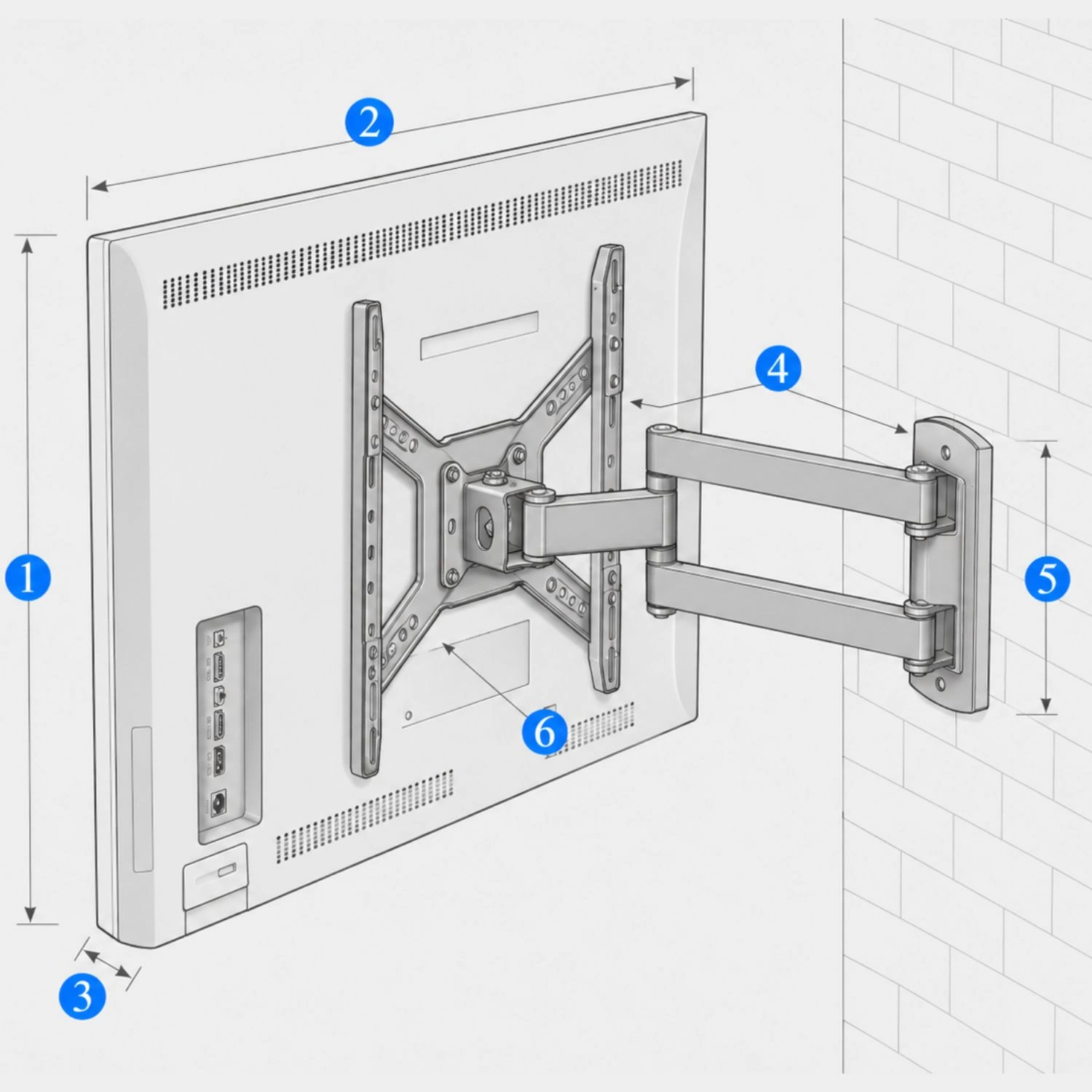
To measure correctly, put a tape measure across the full outside width of the frame from left edge to right edge. Then measure the full height of the frame from the bottom edge to the top edge. Write those numbers down in centimetres. Those are the measurements you need.
Width
Full outside width of the TV frame, left edge to right edge. Include any slightly protruding edge detail or trim piece at the sides.
Height
Full outside height of the TV frame, bottom edge to top edge. For a wall-mounted TV this does not include any stand — just the frame itself.
Depth
Depth is how far the TV protrudes from the wall surface, including the mount arm or bracket. Measure from the wall to the front face of the screen. Most flat wall mounts give a depth of around 5 cm. Tilting mounts and articulating arms vary. Measure the depth in the position you normally leave the TV.
Why depth matters
The depth measurement determines how deep the cover pocket needs to be. A cover that is not deep enough will not fit flush at the sides and will leave a gap at the base. A cover made to the correct depth slips over the TV cleanly and sits flush against the wall on each side.
Material for outdoor screen protection
The cover uses 200gsm solution-dyed polyester. The face fabric is UV-stable, which matters for a screen that may spend months under an alfresco roof with angled sun exposure. UV breaks down standard polyester coatings within a couple of seasons, leaving the cover faded and eventually cracked.
The waterproof polyurethane underside keeps moisture from soaking through and reaching the screen surface. PU coatings are flexible and do not crack along fold lines in heat or cold.
Fitting and care
Fit the cover whenever the TV will be unused for more than a day or two, particularly in seasons with high overnight humidity or coastal salt air. Remove it before use.
Rinse the outside of the cover occasionally with a hose. Do not machine wash. Spot clean any marks with warm water and a soft cloth. Allow to dry fully before refitting.