The Complete Guide
Custom Made Pallet Covers — The Australian Owner's Complete Guide
Pallet furniture has become a popular choice for Australian backyards and outdoor areas. It is practical, inexpensive, and easy to rearrange. The one challenge is finding a cover that actually fits it. This guide explains how to measure and what to look for.
The challenge with pallet covers
Standard pallets in Australia are 116 x 116 cm. That sounds like a simple starting point for a cover, but pallet furniture rarely stays that shape once it is put together.
A typical pallet lounge setting might be two pallets end to end for the seating section, a third pallet as a coffee table, and cushions stacked on top. The combined footprint could be 120 x 240 cm and the height including cushions could be 90 cm. A cover for a single 116 x 116 cm pallet does not come close.
Even if you are just covering plain pallets for storage, the height varies depending on whether they are empty or stacked, and how many are in the stack.
A custom cover is the only way to get a fit that actually works for your specific setup.
How to take the three measurements
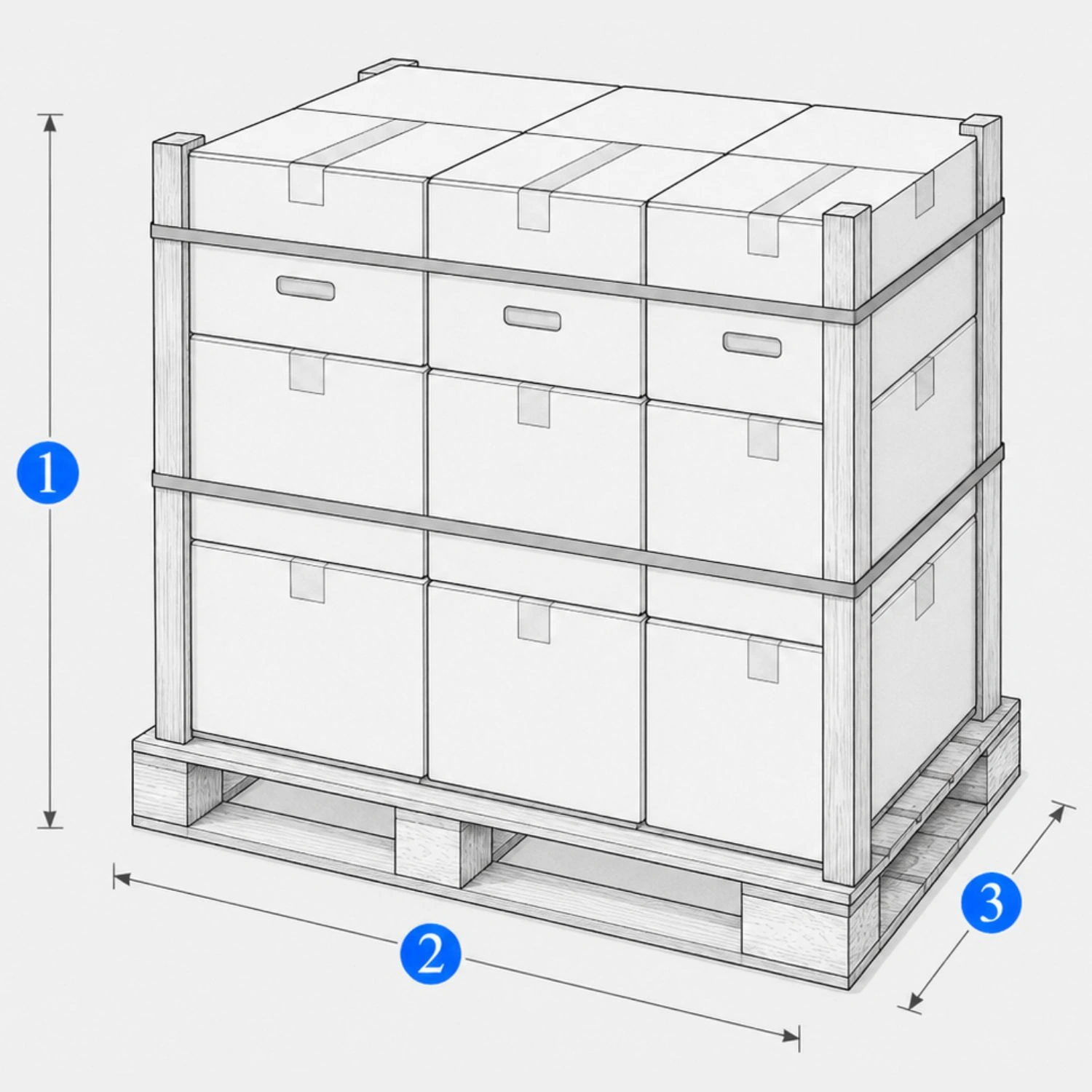
Length
Length is the longest outside dimension of the setup at its widest point. If you have multiple pallets arranged end to end, measure the full combined length. Include any overhang from timber ends or framing.
Width
Width is the shorter dimension, measured at the widest point. If your pallet setting is L-shaped or has pieces of different widths, measure at the overall widest point of the whole configuration.
Height
Height runs from the ground to the top of whatever is on the pallets. For a lounge setting with cushions left on the furniture, measure to the top of the cushion stack. For a bare timber frame, measure to the top of the highest timber. For stacked goods, measure to the top of the load.
If you normally remove cushions before covering the furniture, measure to the top of the timber frame — that is the height the cover needs to be.
Why pallet furniture needs a weatherproof cover
Timber pallets are pressure-treated but not finished for outdoor decorative use. Left unprotected over a wet winter, the timber swells, then shrinks, then cracks. Bolt holes fill with water. The surface gets a mould coating that transfers to anything sitting on it.
Pallet furniture in particular collects water in the gaps between the boards. Once water sits in those gaps, the timber starts to deteriorate from the inside out.
A cover that fits properly keeps the rain off, reduces the UV load on the timber surface, and keeps leaf litter and debris from packing into the gaps over winter.
Material and construction
The cover is made from 200gsm solution-dyed polyester. The pigment runs through each fibre rather than sitting on the surface, so the colour holds through years of outdoor exposure without chalking or peeling.
The waterproof polyurethane underside keeps rain from soaking through. Water runs off the top and sides rather than pooling and wicking through to the timber below.
Care and storage
Shake off any leaves or debris before fitting the cover. When removing the cover for the season, allow it to dry fully before folding and storing. Rinse with a hose if it has accumulated significant dust or bird marks. Do not machine wash.