The Complete Guide
Custom Made Round Table Covers — The Australian Owner's Complete Guide
A round outdoor dining table is one of the easier pieces of garden furniture to cover — it only needs two measurements. But getting those two numbers right is what makes the difference between a cover that works and one that sits wrong, leaks at the edges, or bunches on the ground. This guide covers what you need to know before ordering a custom cover for your round table.
Why glass-top tables need more protection than most
Glass-top outdoor tables are particularly vulnerable to long-term weather damage. Rain is the main culprit. Hard water contains dissolved minerals, and when rain sits on a glass surface and then evaporates, it leaves mineral deposits behind. Over time, those deposits etch into the glass surface and create a permanent milky or spotted appearance that cannot be cleaned off.
UV exposure is a secondary issue for glass itself, but it is significant for the frame and legs. Powder-coated aluminium will fade and oxidise without protection. Timber will dry out, crack, and grey. Wrought iron will rust through even a good paint finish over several seasons of direct UV and moisture.
A cover that fits properly — reaching the ground all the way around, with no gaps at the edge of the tabletop — protects everything from the surface down.
The two measurements you need
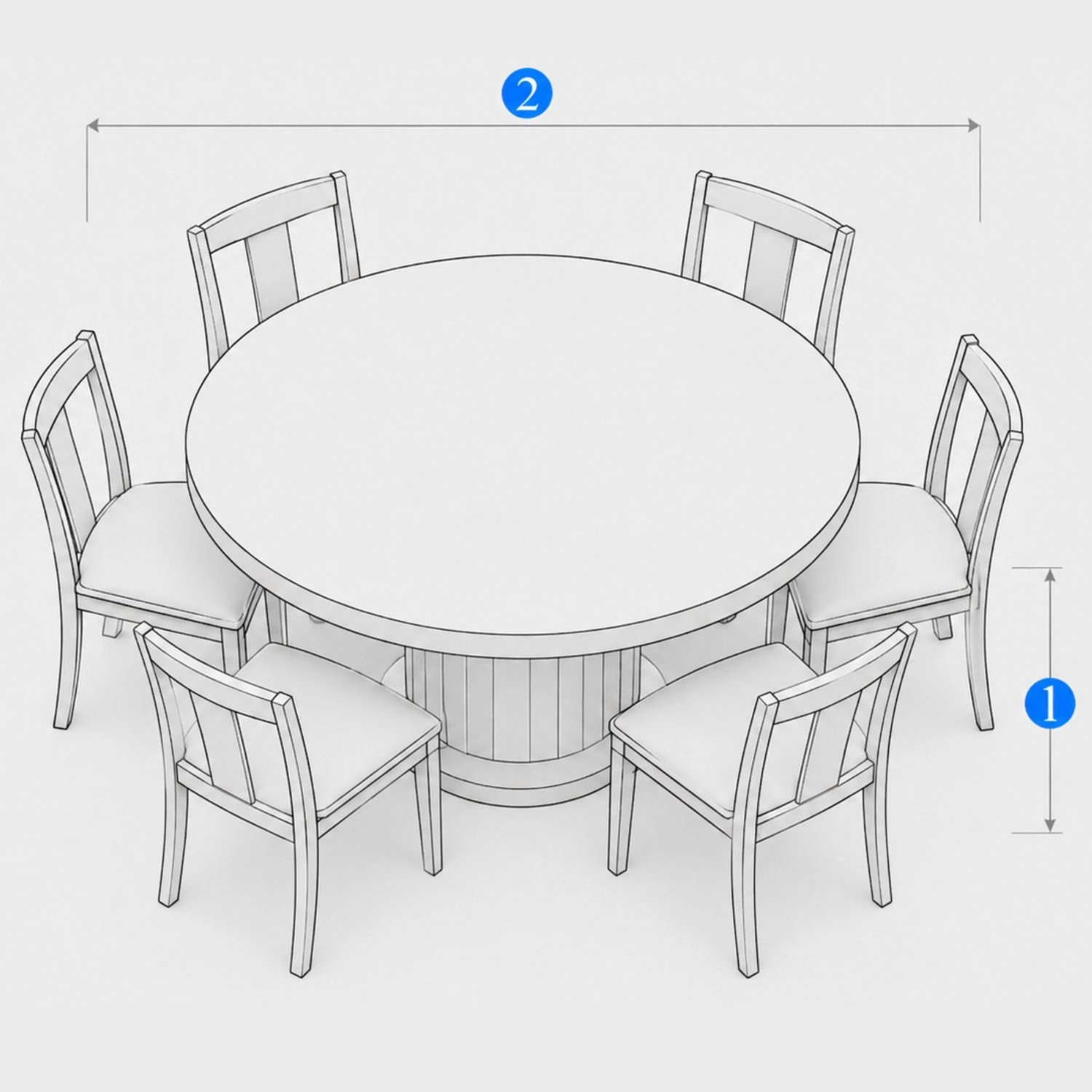
A round table cover only needs two numbers. Most people can get both in under two minutes.
Diameter
Measure the diameter of the tabletop from one outside edge to the other in a straight line through the centre. Measure at the level of the tabletop surface, not the base or the pedestal column beneath it.
If the tabletop has a lip, an overhang, or a decorative edge that extends beyond the main surface, measure to the outer edge of that feature. The cover needs to clear the widest point of the top.
If a direct straight-line measurement is awkward, measure the circumference by running a tape around the outer edge and divide by 3.14. That gives you the diameter.
Height
Measure from the floor to the top surface of the tabletop. This tells us how far the cover needs to drop from the tabletop edge to the ground.
Do not measure to the top of the umbrella hole collar or any metal fitting that sits above the table surface. The relevant height is from floor to the main tabletop surface.
The drape allowance — how far the cover extends below the tabletop edge — is calculated from this measurement and built into the pattern. You do not need to add anything extra.
Why a fitted cover works better than a loose one
A round table cover that is too large for the table will have excess fabric that pools on the ground in rings around the base. That pooled fabric collects water, debris, and mould. It also tends to blow around in wind, which means the cover is not sitting firmly against the table sides and is allowing weather to get in underneath.
A cover cut to the exact diameter sits flush against the table edges all the way around. There is no excess to pool on the ground. The cover contacts the table from the top edge down to the ground in a clean, even drape, which means rain runs off the sides rather than finding a gap.
Protecting the table between seasons
Covering a round table during the off-season is the best thing you can do to extend its life. The combination of UV, rain, and condensation during winter months does more damage than many years of normal use in good conditions.
If your table is in a location that is exposed to salt air — within a few kilometres of the coast — covering it year-round rather than just in winter makes a significant difference. Salt deposits on metal surfaces accelerate corrosion, and on glass they contribute to the etching and mineral buildup described above.
Material
The face fabric is 200gsm solution-dyed polyester. The pigment is worked into the fibre during manufacture rather than applied to the surface, which is why it holds its colour in Australian UV rather than going patchy within a couple of seasons.
The underside carries a flexible polyurethane waterproof coating that sheds water cleanly and stays flexible across the full range of outdoor temperatures. Both layers are UV stabilised throughout.
Caring for your round table cover
Rinse the outside with a garden hose every month or so, particularly after rain or dusty periods. Brush off any debris before putting the cover on. Spot-clean any marks on the inside surface with warm soapy water and allow to dry fully before replacing.
Do not machine wash. The agitation breaks down the waterproof coating in a single cycle. If you fold the cover for storage, vary the fold lines so the coating is not repeatedly stressed at the same point.