The Complete Guide
Custom Made Sun Lounge Covers — The Australian Owner's Complete Guide
Pool loungers and sun beds take more weather punishment than almost any other piece of outdoor furniture. They sit in direct sun, get rained on, and are usually left outside for the whole season. The cushions are expensive to replace and the frames corrode or fade faster without protection. A well-fitted cover is one of the most practical investments you can make for a poolside setup.
Why sun lounge covers are harder to get right than they look
The profile of a sun lounge is deceptively simple. It is essentially a flat rectangle. But sun lounges come in lengths from around 155 cm up to 210 cm and widths from 60 cm to 90 cm, and the combinations between brands are nearly endless. Standard covers are made in three or four sizes, which means most loungers fall between two of them.
A cover that is too long will drape onto the ground at one or both ends, where it will sit in poolside water and break down. A cover that is too wide will not close securely at the base and will let rain in underneath. Getting the length, width, and height right is the difference between a cover that protects the piece and one that is basically decorative.
The three measurements you need
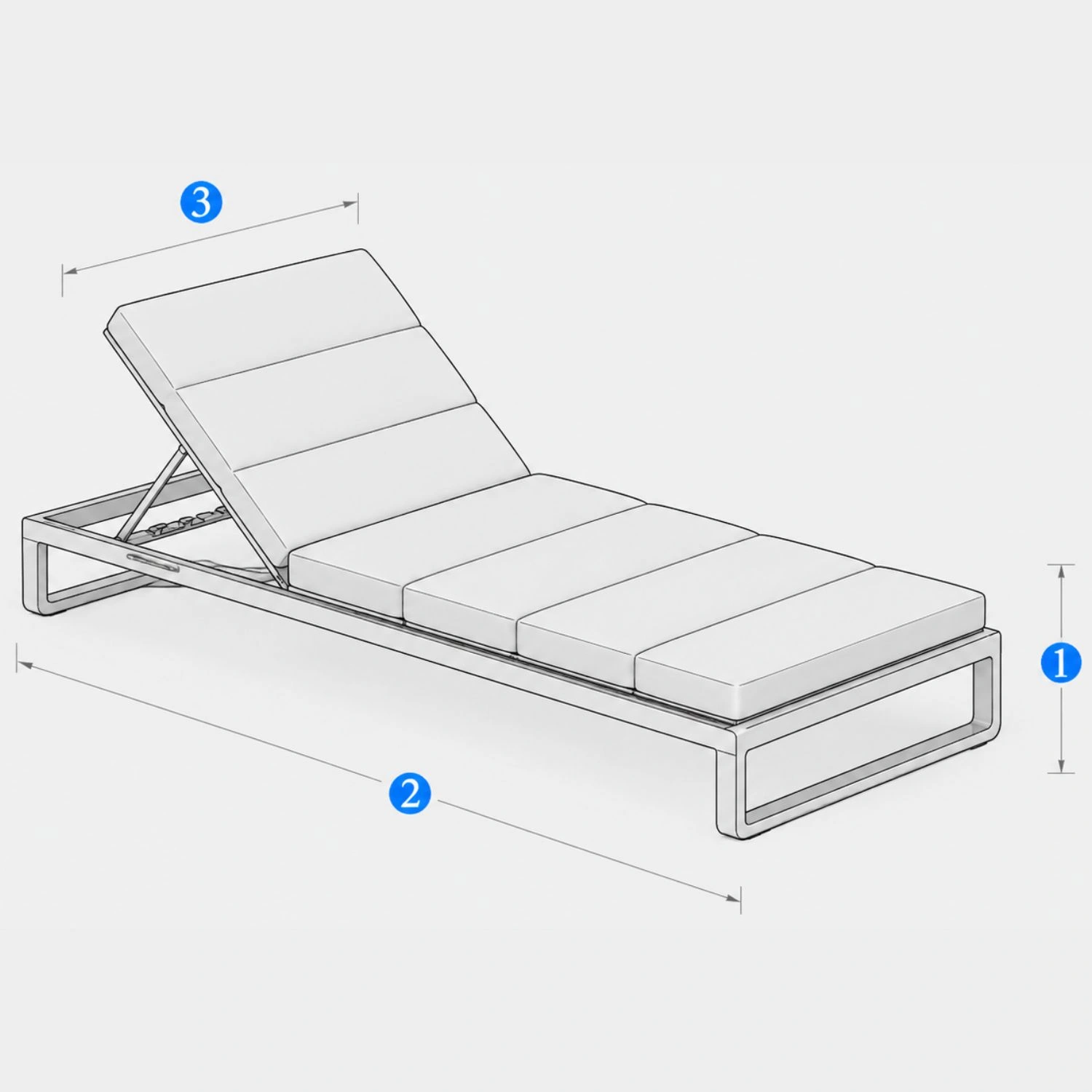
Length
Measure from the very end of the footrest section to the top of the headrest section. Measure along the outside of the frame, not the cushion surface. Include any fixed armrest extensions if they protrude beyond the main frame.
Most sun lounges have a consistent length on both sides, but if your model has a curved or tapered headrest section, measure the longer side.
Width
Measure the widest point of the seat from outside edge to outside edge. On most sun lounges this is the same along the whole length. On some pool loungers the shoulder section is slightly wider than the foot end. Use the larger of the two.
If your lounger has fixed side trays or armrests that extend outward, include those in the width measurement.
Height
Measure from the ground to the top of the backrest. The backrest height is what determines how tall the cover needs to be, not the seat surface height.
Most sun lounges have an adjustable back. Measure with the back in the position you normally leave it when the lounger is stored or not in use. If you always leave it flat, measure it flat. The cover fits the lounger as it sits in storage, not every possible angle.
Protecting cushions is the main reason people buy covers
Sun lounge cushions are the most expensive component to replace and the most vulnerable to weather damage. UV bleaches the fabric within a season or two. Rain soaks through cover-free cushions and leads to mould inside the foam. Salt air accelerates the deterioration of both the fabric and the foam core.
A fitted cover that goes over the whole lounger, cushions included, keeps all of that out. The 200gsm face fabric blocks UV. The waterproof undercoating stops rain from reaching the cushions. And a close fit at the base means the protection starts at ground level rather than leaving a gap at the bottom.
Material
The face fabric is 200gsm solution-dyed polyester. The pigment is added to the fibre during manufacture, which means it goes all the way through each thread rather than sitting on the surface. That is what makes it resist fading in Australian UV. Surface-dyed fabrics go patchy within a season or two in full sun.
The underside carries a flexible polyurethane waterproof coating. It stays pliable in heat and cold and will not crack at fold lines over time. The whole fabric system is UV stabilised, which extends the working life of the cover in outdoor conditions.
Caring for your sun lounge cover
Rinse the outside of the cover with a hose every month or so during the season, particularly after heavy rain or dust. Shake off leaves and debris before putting the cover on — grit can scratch the frame and cushion fabric if it gets trapped underneath.
If the cover picks up sunscreen or poolside residue on the inside, spot-clean with warm soapy water and let it dry fully before putting it back on. Do not machine wash. The agitation breaks down the waterproof coating in a single cycle.