The Complete Guide
Custom Made Treadmill Covers — The Australian Owner's Complete Guide
Outdoor treadmills deal with a range of conditions that indoor machines never see. This guide walks through how to measure for a custom cover and why the material choice matters for long-term protection.
Why outdoor treadmills need proper cover
The console is the most vulnerable part of any treadmill. It contains the electronics, the display, and the control board. On an indoor machine that is never an issue, but an outdoor treadmill on a patio or in an open garage can catch rain, morning dew, and windborne dust every day it is not in use.
Most people learn this the hard way. Water gets into the console through a gap at the top or sides of a loose-fitting cover, or through no cover at all. The first thing to go is usually the display, followed by the motor controller. Replacing a console board costs several hundred dollars. A cover costs far less.
The belt and motor housing are also exposed. UV breaks down rubber and plastic over time, making the belt brittle and prone to cracking. A cover that sits flush over the whole machine protects all of it.
How to take the three measurements
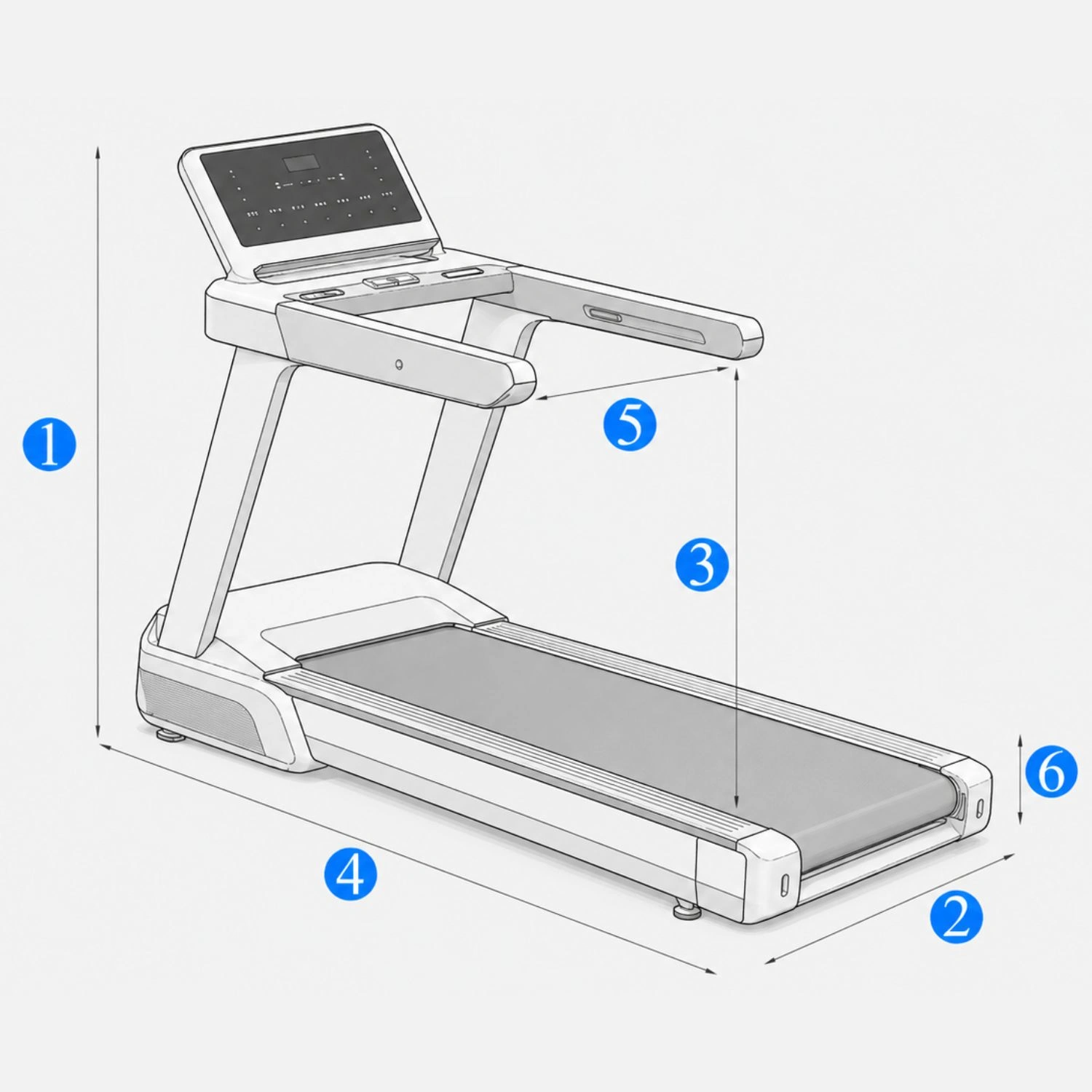
Length
Length runs from the front of the machine to the back. On most treadmills the front is the console end and the back is the far end of the belt deck. Measure from the outermost point at the front, including any console overhang, to the very back of the machine including any rear feet or end caps.
Width
Width is the widest point of the machine measured side to side. On most treadmills this is across the belt platform or the console support arms. Take the measurement at whatever level the machine is widest.
Height
Height runs from the floor to the highest point of the machine in its stored or resting position. On most treadmills this is the top of the console screen. If the handlebars extend above the console, measure to the top of the handlebars. Always measure with the machine configured as you normally leave it.
If your treadmill has handlebars that fold down for storage, measure with them folded. The cover is built for the machine as it sits, not as it would look in use.
Material and why it matters for treadmills
Treadmills have a large flat top surface — the console and the area around it. Water that lands on top of a loose or poorly shaped cover sits there rather than running off. That is why waterproofing and fit both matter.
The fabric is 200gsm solution-dyed polyester. Solution-dyed means the colour is part of the fibre, not a surface coat. Australian UV conditions will fade a surface-dyed fabric within a couple of seasons. A solution-dyed fabric holds its colour through years of outdoor exposure.
The waterproof underside is a polyurethane coating. PU coatings stay flexible in both heat and cold. They do not crack along fold lines or get sticky in summer heat the way PVC-based coatings do. Water that lands on the cover runs off to the sides rather than soaking through.
Caring for your treadmill cover
Brush or shake off any dust or debris before fitting the cover. Grit caught between the cover and the machine can scratch the console casing over time.
Rinse the outside of the cover with a hose every few months. If any moisture gets underneath during an unusually heavy storm, allow both the cover and the machine to dry completely before replacing the cover.
Do not machine wash the cover. The agitation breaks down the waterproof coating quickly. Spot cleaning with warm water and a soft cloth is all that is needed for any marks or stains.
Store the cover folded loosely when not in use rather than compressed tightly. Varying the fold points each time avoids repeated stress on the same sections of the material.